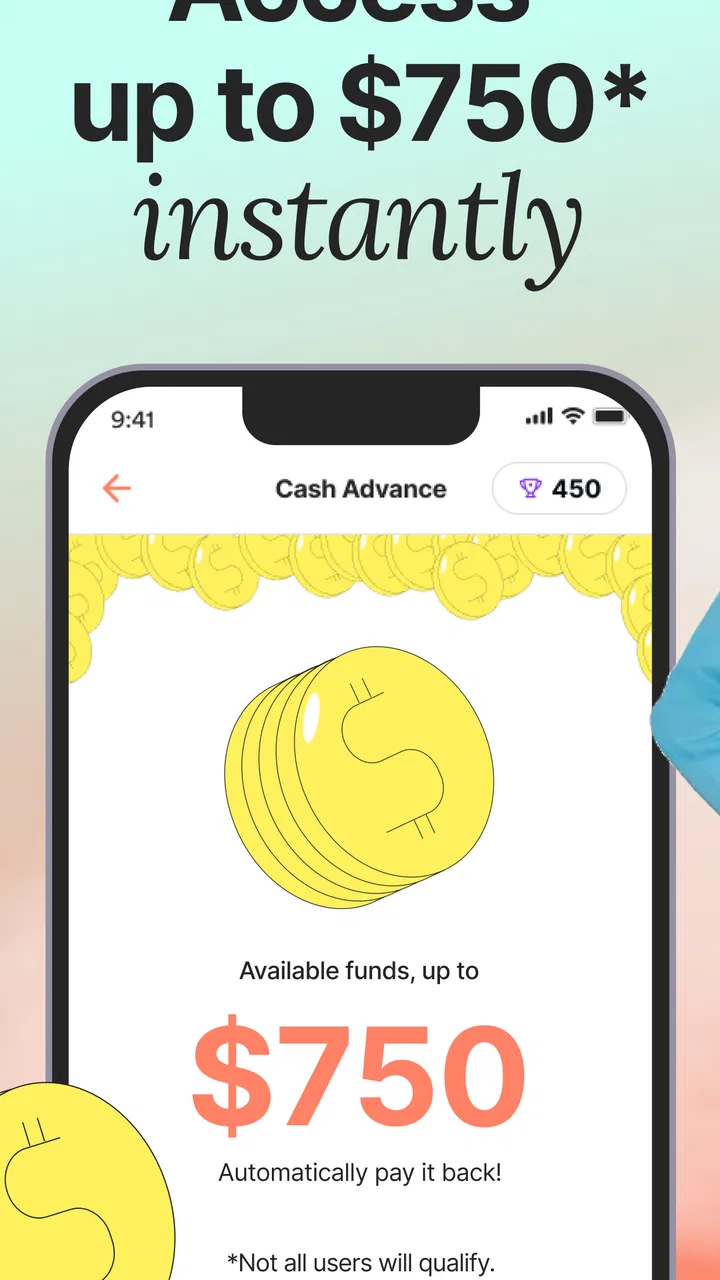
Klover - Instant Cash Advance
- 4.6
- Rating
- 5.00M
- Installs
- Free
- Price

 Analysis by App-foxy
I approached Klover as a practical finance app rather than a general budgeting tool. Its purpose is straightforward: help eligible users request an advance on expected income when a short-term cash gap appears. That makes it potentially useful in a very specific moment, but it also means the app should be judged by more than how quickly it presents an offer. The important questions are whether the process feels clear, whether the repayment fits your next pay cycle, and whether using an advance solves a one-off problem without becoming a repeated habit.
Klover is free to install and is developed by Klover Holdings. It sits in the finance category, carries an Everyone content rating, and has built a large audience, with more than a million installs and a 4.6 average from roughly 143 thousand ratings. Those figures suggest that many people find the concept useful, but popularity should not be confused with universal eligibility or suitability. In my view, this is best considered a short-term cash-flow tool, not a replacement for savings, regular income planning, or a conventional bank account.
How Klover feels to use today
The central experience is built around requesting cash when waiting for payday creates pressure. That can be appealing because the problem is easy to understand: an unexpected bill, a necessary purchase, or a few days of tight budgeting can make the next paycheck feel too far away. Instead of treating the app like a long-term loan-management platform, I found it more useful to think of it as a temporary bridge that needs a clear exit plan.
You May Also Like

 Blood Strike: 2.5 Anniversary
Blood Strike’s Loadouts Turn Every Drop Into a Tactical Gamble
A close look at Blood Strike’s custom loadouts: how fast access to signature weapons reshapes its battle royale rhythm, rewards preparation, and narrows the gap between fights.

 Pandora - Music & Podcasts
Pandora’s Music Is Easy to Start, but Harder to Recover
Pandora’s strength is its low-effort path from a seed to a station. Its weak spot is how much confidence it asks you to place in connection, setup, and quiet recovery.

 8 Ball Pool
 Is Built on Rivalries, Rematches, and Routine
A close look at the rivalries, rematches, shared routines, and unanswered safety questions that turn a quick pool match into a persistent mobile community.

 Samsung Music
’s Quiet Strength Is Playing What You Already Own
Its reach comes less from spectacle than from dependable access to a personal library. That simplicity is both the app’s strongest retention engine and its ceiling.

 AccuWeather: Weather Radar
AccuWeather Review: A Quick, Clear Forecast for Everyday Decisions
For everyday plans, the best forecast is the one you can understand quickly. AccuWeather makes rain timing, radar, and local conditions easy to act on, with a few trade-offs.

 Hill Climb Racing
Why Hill Climb Racing Still Turns Crashes Into One More Run
A tiny car, a bumpy hill and one more upgrade: Hill Climb Racing keeps resurfacing because its simple chaos makes every near-miss feel personal.
More From Our News Desk



The first thing I would do before relying on any advance is read every screen carefully. Finance apps often make the main action visually obvious, while important conditions may require more attention. With Klover, the sensible approach is to check the amount offered, the expected repayment timing, and any cost or optional service connected to the transaction before confirming. If those details do not fit comfortably into your next income cycle, the convenience of receiving money now may create a larger problem later.
The app is free to download, which lowers the barrier to trying it. That does not mean every possible transaction or optional feature should be assumed to be free. I would separate the installation cost from the cost and timing of the specific advance presented inside the app. This distinction matters with any cash-advance service, especially when speed is the main attraction and a user may be tempted to tap through quickly.
Klover is aimed at people who already have a predictable relationship with their income and need help managing timing. Someone paid on a regular schedule may use it for a small emergency, then restore the balance when wages arrive. Someone whose income changes substantially from week to week may find the repayment date harder to manage. The app cannot remove the underlying shortage; it only changes when part of the money becomes available.
The everyday situation where it makes sense
Imagine that a routine expense lands just before payday and your account is short by a modest amount. You know when your next income is due, and you have already checked that the following pay period will cover normal bills after repayment. In that narrow situation, an advance can be more convenient than asking a friend, using an overdraft, or putting the expense on a credit card. Klover’s value comes from reducing friction during that short window.
My practical advice is to write down three figures before requesting anything: the amount you genuinely need, the money already committed to bills, and what will remain after the next paycheck arrives. This small calculation is more important than the app’s speed. If the remaining amount is uncomfortable, requesting less may be wiser than accepting the maximum shown. A cash advance should address the immediate expense without quietly moving the same shortage into the next month.
Another useful habit is to open the app only when there is a defined reason. Browsing available cash when nothing is urgent can make borrowing feel like extra spending power. I would avoid treating an available offer as part of my normal budget. The amount is still tied to future income, and future income already has a job: rent, food, transport, utilities, and other commitments.
What the current version tells existing users
The current version is 4.93.0, which gives existing users a clear reference point when checking whether their installation is up to date. App updates can improve compatibility, repair bugs, or refine screens, but a version number alone does not tell me that the underlying financial terms have changed. I would therefore treat an update as a software change, not as proof that an advance will become cheaper, larger, or available to everyone.
The product has been available since April 12, 2020, so it is not a brand-new experiment. Its continued presence and substantial user base indicate that the basic cash-advance idea has found a lasting audience. At the same time, a mature app still deserves the same careful review of each transaction. Financial products evolve through interface changes and eligibility decisions, but the user’s responsibility remains constant: understand the offer before accepting it.
For someone who has used Klover before, the most noticeable benefit of keeping the app installed is familiarity. Once you understand where to review an offer and where repayment information appears, the process may feel less intimidating during an urgent moment. That familiarity can also become a weakness. A known interface encourages faster decisions, so I would deliberately slow down and reread the final details each time instead of assuming a new offer matches an earlier one.
Users returning after an update should pay attention to wording, dates, and confirmation screens rather than relying on memory. A changed layout can move an important detail or alter how an optional action is presented. I would also check notifications and account information after any completed transaction, keeping a personal note of the expected repayment date. That simple record gives me something independent to compare with what the app displays.
Where it stands against ordinary alternatives
The usual alternatives each solve a different part of the problem. A savings buffer is slower to build but normally avoids borrowing altogether. A credit card may offer more flexibility for a larger purchase, yet it can keep a balance outstanding and introduce interest if it is not cleared. An overdraft can be convenient through a bank account, but its cost and rules vary widely. Asking someone close to you may avoid a formal application, although it can create personal pressure.
Klover’s advantage is focus. It is designed around the gap between now and incoming pay rather than around broad spending, investing, or account management. That can feel simpler than arranging a traditional personal loan for a relatively small, short-lived need. The trade-off is that its usefulness is narrower. If you need a large amount, a long repayment period, or a structured plan for several debts, a bank, credit union, nonprofit counselor, or another established financial provider may be more appropriate.
I would also compare the total consequence, not just the headline amount received. A fast advance can look less expensive than a credit card because the transaction feels smaller, but the right comparison includes any applicable charge, the timing of repayment, and what happens if the next paycheck is already heavily committed. The best option is the one that leaves your essential expenses protected, not necessarily the one that puts money in your account first.
For recurring shortages, none of these short-term options is a real fix. If the same advance is needed every pay cycle, the pattern points to a gap between income and regular expenses. In that case, I would prioritize a basic spending review, a conversation with bill providers, a change in payment dates where possible, or professional financial guidance. Klover may help with one emergency, but repeated dependence can make the underlying budget harder to repair.
Small workflow choices that make a difference
One non-obvious strength of a cash-advance app is that it can help a user act before a minor problem becomes a costly one. A late utility payment, missed transport expense, or necessary household purchase may trigger fees or disruption if ignored. When the amount is genuinely small and repayment is certain, acting early can be less damaging than waiting until the situation escalates. The important qualification is that this only works when the next income event is reliable.
A second useful workflow is to separate the request from the spending decision. I would first decide what the expense is, then request only that amount, and finally keep the money reserved for that purpose. This avoids the common trap of seeing an advance as a general balance. If the original bill turns out to be lower, I would avoid inventing a reason to spend the difference.
A third is to review the repayment timing alongside automatic bills. People often calculate whether they can repay an advance but forget that subscriptions, rent, or scheduled transfers may leave the account on the same day. Looking at the whole pay-period calendar is more reliable than checking the balance at one moment. I would leave a cushion rather than planning repayment down to the last dollar.
A fourth consideration is privacy and account confidence. Any finance app deserves the same caution as a bank-related service: use the official application, protect the device, avoid sharing login details, and read requests for access before approving them. I would not install a modified copy or use a public device for a financial account. These are ordinary precautions, but they matter more when the app is connected to income and repayment information.
Who should use it, and who should skip it
Klover is most suitable for an adult who has predictable incoming pay, understands the amount being requested, and can identify the exact repayment path. It may be useful for a one-time timing mismatch where waiting would cause a concrete inconvenience. The Everyone rating makes the app broadly accessible from a content-classification perspective, but that rating should not be read as a promise that every person will qualify or that the service fits every financial situation.
I would skip it if I did not know when my next income would arrive, if essential bills were already unaffordable, or if I needed an advance to repay another advance. I would also look elsewhere if the expense were large enough to require a longer plan. In those circumstances, the speed that makes Klover attractive could hide the fact that the problem needs a different solution.
People who prefer complete control through their own savings may not gain much from it. Likewise, users looking for detailed budgeting, investment research, or credit-building education should not expect a cash-advance app to replace a dedicated tool. Klover’s role is specific, and its value is strongest when the need is specific too.
Questions I would settle before tapping confirm
The first question is whether the amount shown is actually available for my situation or merely an initial indication. I would continue through the process far enough to understand the final offer, then check the repayment date and any associated cost. I would not make a spending commitment based only on an amount I have seen before or expect to see.
The second is whether the money will arrive in time for the emergency. “Instant” language can sound absolute, but real-world timing may depend on the selected delivery method, account details, processing, or other conditions shown in the app. If the bill is due within hours, I would verify the expected arrival before relying on Klover as the solution.
The third is what happens if circumstances change. Before accepting an advance, I would look for the app’s explanation of repayment, notifications, and available support. If my paycheck might be delayed, I would not assume that the original plan will automatically adjust. A service can be easy to request and still require careful action when the expected income does not arrive as planned.
The fourth is whether the app is worth keeping after the immediate need ends. If I use it once and have no continuing cash-flow problem, I may prefer to remove unnecessary financial apps from my phone after saving any records I need. If I keep it, I would disable distractions where possible and treat notifications as reminders to review account activity, not as invitations to borrow.
Remaining gaps and what I would watch
The biggest limitation is structural: an advance changes timing, not income. That sounds obvious, but it is easy to forget when the interface presents the money as a quick solution. The app is also not a substitute for comparing alternatives. A user should still consider savings, a bank option, an employer resource, or a negotiated bill arrangement when those choices are available and less costly.
I would watch how clearly future updates explain changes to eligibility, delivery, repayment, and optional services. The current version shows that the software is actively maintained, but responsible users need more than a fresh version number. Clear explanations are especially important in finance because a small wording change can affect a decision with real consequences.
I would also watch my own behavior. The most revealing measure is not how many times the app opens or how quickly a request completes; it is whether using it leaves me more stable after payday. If each use makes the following pay period tighter, the app is no longer functioning as a bridge. It has become part of the financial shortfall.
My final view is cautiously positive. Klover can be a convenient option for a narrowly defined, short-term cash gap, and its established presence makes it worth considering when the repayment plan is genuinely secure. I like the idea of a focused tool that helps with timing, but I would never recommend accepting an advance casually. Use it only when the next income event is clear, the amount is limited to a real need, and the repayment will not threaten essentials.
For that kind of user, the free app may provide useful breathing room. For someone facing ongoing debt, uncertain income, or a need for a larger and longer-term solution, I would choose a different path first. Klover is at its best when it remains an occasional emergency tool rather than becoming a normal part of the monthly budget. That is the distinction I would keep in mind before installing it, requesting cash, or deciding whether to keep it on my phone.
FAQs for Klover - Instant Cash Advance
01What is Klover - Instant Cash Advance, and how does it work?
Klover is a financial app designed to provide users with instant cash advances without the need for a credit check. By connecting the app to your bank account, Klover analyzes your financial habits to determine your eligibility for a cash advance. This can be particularly useful for bridging gaps between paychecks.
02Is Klover safe to use, and how does it protect my personal information?
Yes, Klover is committed to ensuring user privacy and security. The app employs bank-level encryption to protect your personal and financial information. Additionally, it does not sell your data to third parties, ensuring your information remains confidential and secure while using the app.
03Are there any fees or interest rates associated with using Klover?
Klover does not charge interest on the cash advances it provides. However, there may be optional fees for expedited transfers if you need funds faster than the standard delivery time. It's important to review these options within the app to understand any potential costs before proceeding.
04Who is eligible to use Klover, and what are the requirements?
To use Klover, you must be at least 18 years old and have an active checking account with a regular income. The app requires you to connect your bank account to verify your financial activity, ensuring you have a consistent income stream to qualify for cash advances.
05How quickly can I receive a cash advance from Klover, and what are the repayment terms?
Once approved, standard cash advances typically take 1-2 business days to arrive in your bank account. For those who opt for expedited service, funds can be available within minutes. Repayment is automatically debited from your bank account on your next payday, making the process seamless and hassle-free.
Pros
- Easy-to-use interface for quick navigation.
- No hidden fees or interest charges.
- Fast approval process for cash advances.
- No credit check required for eligibility.
- Secure data protection measures implemented.
Cons
- Limited to small cash advance amounts.
- Requires access to personal financial data.
- Service fees can add up over time.
- Not available in all states.
- Repayment tied to bank account deposits.

Klover - Instant Cash Advance
Gallery